MODAK – The Traditional Sweet of Ganpati Festival
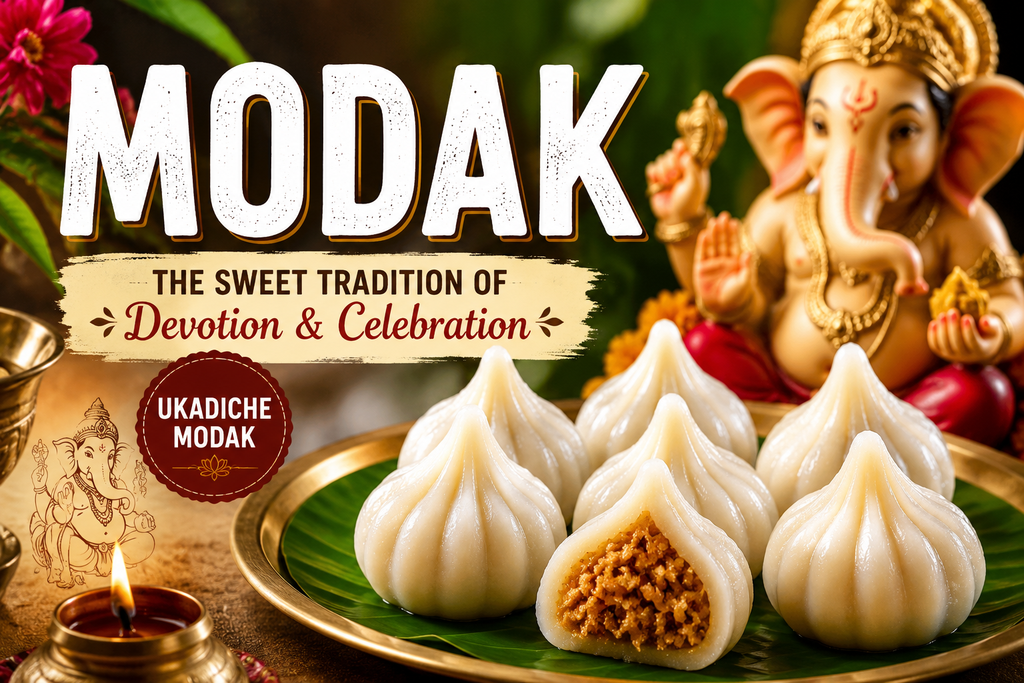
Modak is one of the most beloved traditional Indian sweets, especially associated with the Ganpati Festival in Maharashtra. Soft, aromatic, and filled with a delicious mixture of coconut and jaggery, Ukadiche Modak holds a special place in Maharashtrian culture and cuisine. It is traditionally prepared as an offering to Lord Ganesha, who is lovingly known as Modakpriya, meaning “one who loves Modak.”
During Ganesh Chaturthi, homes across Maharashtra fill with the fragrance of freshly steamed Modak. Families come together to prepare this special sweet, making it not just a food but an important part of celebration, devotion, and tradition.
Importance of Modak in Ganpati Festival
Ganpati Festival is celebrated with great enthusiasm across Maharashtra and many other parts of India. Lord Ganesha is considered the remover of obstacles and the god of wisdom, prosperity, and new beginnings.
Modak is traditionally considered Lord Ganesha’s favourite sweet. According to Hindu tradition, offering Modak to Lord Ganesha is believed to bring happiness, prosperity, and blessings to the family. The shape of the Modak is also considered symbolic, with its pointed top representing spiritual growth and the sweetness inside representing the rewards of knowledge and devotion.
During Ganesh Chaturthi, devotees prepare Modak as Naivedya and offer it to Lord Ganesha during the पूजा. After the offering, the Modak is distributed among family members and visitors as Prasad.
In Maharashtra, making Ukadiche Modak has become an important part of the Ganpati celebration. Grandmothers and mothers often pass down their traditional recipes and techniques to younger generations, keeping this culinary heritage alive.
What is Ukadiche Modak?
Ukadiche Modak literally means steamed Modak. Unlike fried Modak, the outer covering is made from rice flour and is cooked in hot water before being shaped. It is then filled with a sweet mixture of fresh coconut and jaggery and steamed.
The combination of soft rice flour covering, sweet jaggery, fresh coconut, and aromatic cardamom creates a unique taste and texture.
Ingredients for Ukadiche Modak
For the Outer Covering:
- Rice flour
- Water
- A little ghee
- A pinch of salt
For the Filling:
- Fresh grated coconut
- Jaggery
- Cardamom powder
- A little ghee
- Optional: saffron, nutmeg powder, or dry fruits
Process of Making Ukadiche Modak
1. Prepare the Coconut-Jaggery Filling
Start by heating a pan and adding a little ghee. Add freshly grated coconut and jaggery. Cook the mixture over medium heat until the jaggery melts and combines well with the coconut.
The mixture should become slightly thick but should not be overcooked. Add cardamom powder for fragrance and flavour. Once ready, allow the filling to cool.
2. Prepare the Rice Flour Dough
Bring water to a boil in a vessel. Add a little salt and ghee. Slowly add rice flour while stirring continuously to prevent lumps.
Cover the vessel and allow the mixture to cook for a few minutes. Once the rice flour becomes soft and well cooked, transfer it to a plate or bowl.
While the mixture is still warm, knead it carefully into a smooth and soft dough. You can use a little warm water or ghee while kneading if required.
The dough should be soft and flexible because this makes shaping the Modak easier.
3. Shape the Modak
Take a small portion of the dough and make a smooth ball. Flatten it gently with your fingers to create a thin, round disc.
Place a spoonful of the coconut-jaggery filling in the centre. Carefully bring the edges together and create small pleats around the filling.
Bring all the pleats together at the top and gently seal the Modak. Traditionally, the pleats are made by hand, giving every Modak its beautiful traditional appearance.
4. Steam the Modak
Place the prepared Modak in a steamer lined with banana leaves or a lightly greased steaming plate.
Steam the Modak for approximately 10–15 minutes, or until the outer covering becomes soft, slightly translucent, and cooked.
Once steamed, carefully remove the Modak and serve it warm with a little ghee.
The result is a soft, fragrant and delicious Ukadiche Modak that is perfect for offering to Lord Ganesha.
Different Types of Modak
Although Ukadiche Modak is one of the most traditional varieties, many different types of Modak are enjoyed today.
1. Ukadiche Modak
This is the classic Maharashtrian steamed Modak. It has a rice flour outer covering and a filling made mainly from coconut and jaggery.
2. Fried Modak
Fried Modak has a crispy outer covering and a sweet filling. It is deep-fried until golden brown and is popular during festivals.
3. Chocolate Modak
A modern variation, Chocolate Modak is prepared using chocolate, condensed milk, milk powder, or other chocolate-based ingredients. It is particularly popular with children.
4. Mawa Modak
Mawa Modak is made using khoya or mawa, sugar, cardamom, and sometimes nuts. It has a rich and creamy texture.
5. Dry Fruit Modak
Dry Fruit Modak is prepared using cashews, almonds, pistachios, dates, raisins, and other nuts and dried fruits. It is a rich and festive variation.
6. Motichoor Modak
This variety combines the flavour and texture of traditional Motichoor Ladoo with the iconic Modak shape. It is colourful, soft, and popular for festive celebrations.
7. Besan Modak
Besan Modak is prepared using gram flour, ghee, sugar, and aromatic spices. It offers a delicious twist on the traditional Modak.
8. Mango Modak
Mango-flavoured Modak is a contemporary variety that combines the sweetness and aroma of ripe mango with the traditional Modak shape.
Modak – More Than Just a Sweet
For generations, Modak has represented more than just a delicious dessert. It represents devotion, family, tradition, and celebration.
The process of preparing Modak during Ganpati Festival often brings the entire family together. One person prepares the filling, another kneads the dough, while others carefully shape the Modaks. Children especially enjoy helping with the pleating and shaping.
The handmade nature of Ukadiche Modak makes every batch special. Each Modak may look slightly different, but that is part of its charm and traditional character.
Modak is an inseparable part of the Ganpati Festival, particularly in Maharashtra. From the preparation of the coconut-jaggery filling to carefully making the delicate pleats and steaming each Modak, the entire process reflects India’s rich culinary heritage.
While modern varieties such as chocolate, dry fruit, and mango Modak have become popular, traditional Ukadiche Modak continues to hold a special place in the hearts of devotees and families.
During Ganesh Chaturthi, the sight of a beautifully arranged plate of Modaks offered before Lord Ganesha is a symbol of faith, happiness, and celebration. Whether homemade using a generations-old recipe or prepared using modern techniques, Modak remains a sweet tradition that brings people together year after year.
Ganpati Bappa Morya! 🙏
Mangal Murti Morya!