Cashew Fruit (Bondu)
The cashew fruit is one of nature’s most fascinating and underappreciated tropical treasures. While most people around the world are familiar with the cashew nut, far fewer know about the vibrant, juicy fruit that grows alongside it. Native to tropical regions, especially along coastal belts like India’s Konkan region, the cashew fruit is not only unique in appearance but also rich in flavor, nutrition, and cultural significance.
What is the Cashew Fruit?
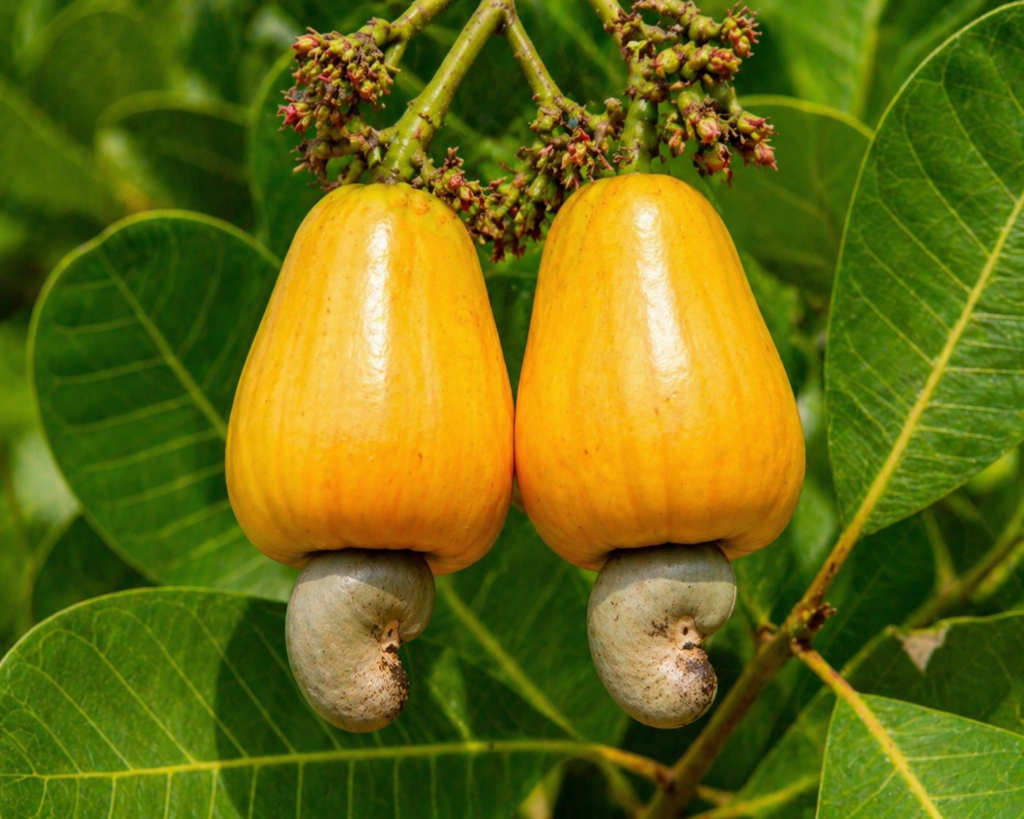
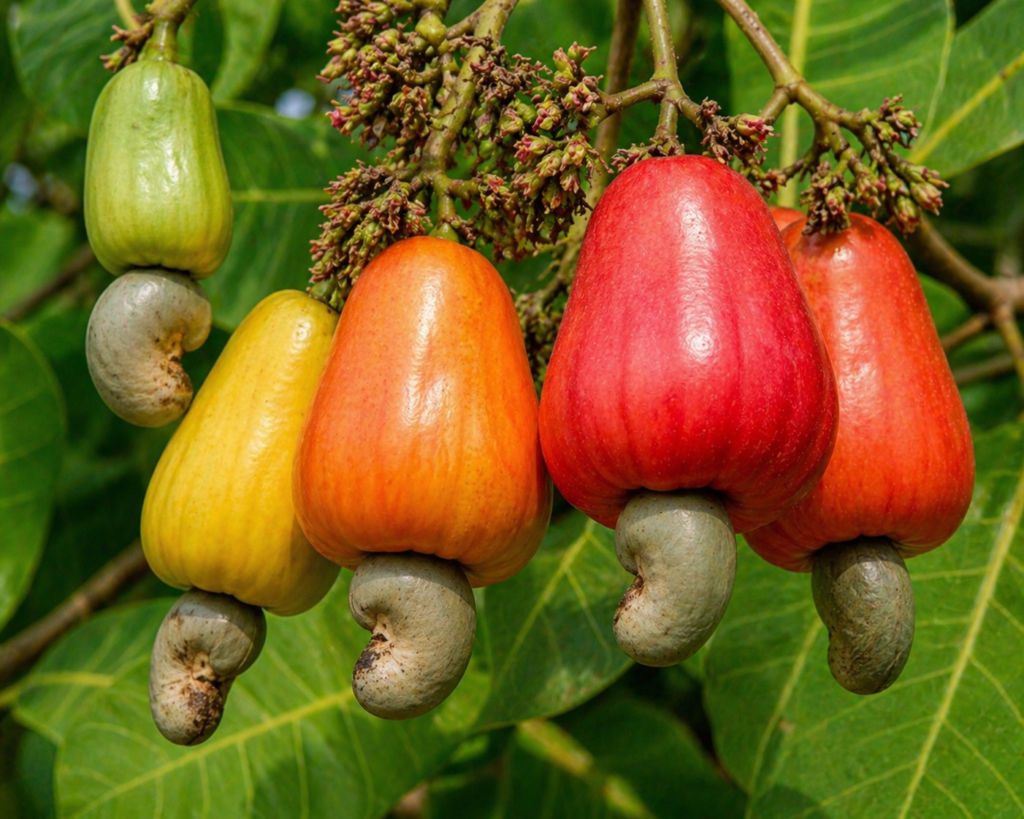
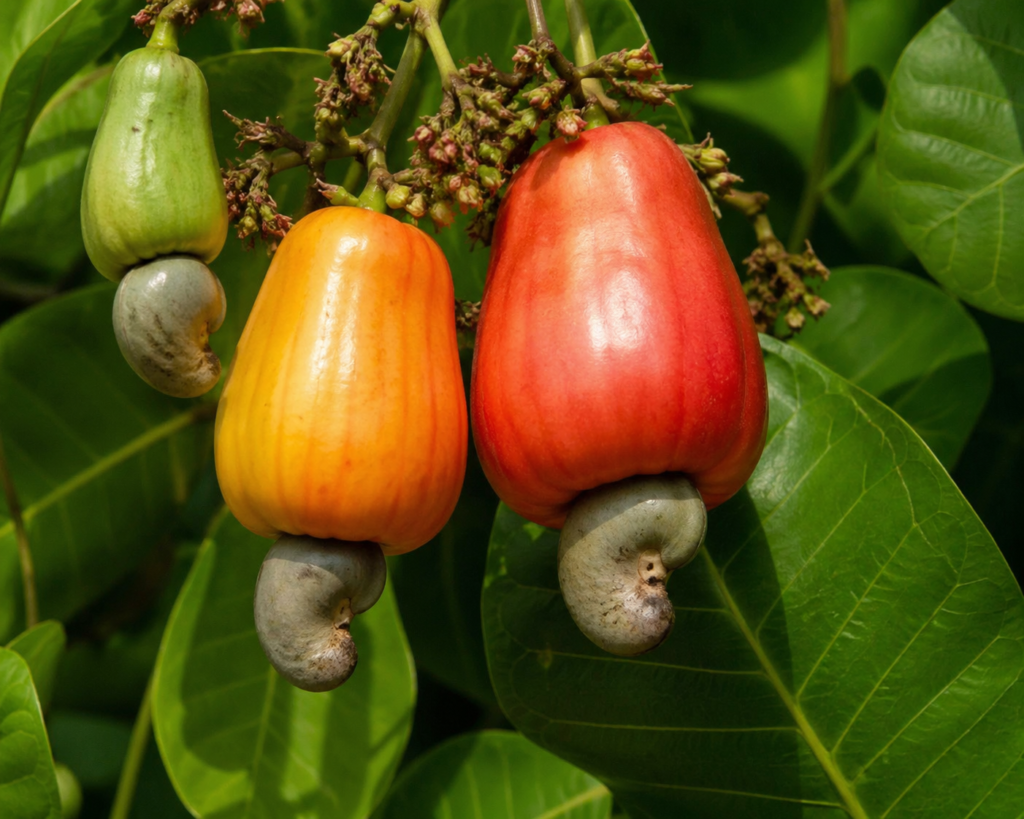
The cashew fruit consists of two parts: the cashew apple and the cashew nut. The nut, which we commonly eat, grows externally at the bottom of the fruit in a hard shell. Above it sits the cashew apple — a fleshy, pear-shaped structure that can be yellow, orange, or bright red when ripe. Scientifically, the cashew tree is known as Anacardium occidentale, and it thrives in warm, tropical climates.
The cashew apple is technically not a “true fruit” but a swollen stem (called a pseudofruit). Despite this, it is entirely edible and packed with juice and nutrients.
Taste and Texture
The cashew apple has a unique flavor that is often described as a mix between sweet, tangy, and slightly astringent. When you bite into it, the juice bursts out, making it extremely refreshing but also somewhat fibrous. The astringency can leave a dry feeling in the mouth, which is why many people prefer consuming it in processed forms like juices, syrups, or fermented drinks.
Fresh cashew apples are highly perishable and must be consumed quickly after harvesting, which is one reason they are not widely available in commercial markets compared to cashew nuts.
Nutritional Value
Cashew fruit is a powerhouse of nutrition. It is especially rich in:
- Vitamin C: Often higher than oranges, making it excellent for boosting immunity
- Antioxidants: Helps fight free radicals and supports overall health
- Dietary Fiber: Aids digestion
- Minerals: Contains potassium, magnesium, and iron
Due to its high vitamin C content, cashew fruit is traditionally used to strengthen the immune system and improve skin health.
Uses of Cashew Fruit
In many parts of India, especially in Maharashtra, Goa, and Kerala, the cashew fruit is used in a variety of traditional preparations:
- Juices and Syrups
Cashew apple juice is refreshing and tangy, often sweetened and bottled as a summer drink. - Fermented Beverages
In Goa, the fruit is famously used to produce feni, a traditional alcoholic beverage made through fermentation and distillation. - Jams and Pickles
The fruit can be cooked into jams or even pickled for a unique flavor experience. - Drying and Candying
Some regions dry or candy the fruit to extend its shelf life and reduce its astringency. - Animal Feed and Compost
Due to its abundance during harvest season, leftover fruit is sometimes used as cattle feed or compost.
Economic Importance
While the cashew nut dominates global trade, the cashew apple has significant untapped potential. In countries like India, large quantities of cashew apples go to waste because of their short shelf life and limited awareness. However, with growing interest in natural and functional foods, cashew fruit products like juices, concentrates, and health drinks are gaining popularity.
For local farmers, especially in coastal regions, utilizing the cashew apple can add an additional source of income. Small-scale industries are now exploring ways to process and preserve the fruit efficiently.
Health Benefits
Regular consumption of cashew fruit in appropriate forms can offer several health benefits:
- Boosts immunity due to high vitamin C
- Improves digestion with natural fiber
- Supports heart health with essential minerals
- Helps detoxify the body through antioxidants
However, it should be consumed in moderation, especially in raw form, due to its strong astringent properties.
Also Check this – MANGO- The Gold of Konkan
Challenges and Future Potential
The biggest challenge with cashew fruit is its perishability. It spoils within 24–48 hours after harvesting, making transportation and storage difficult. Additionally, the astringent taste limits its direct consumption for some people.
Despite these challenges, advancements in food processing and preservation techniques are opening new doors. Products like cashew apple juice, kokum-style beverages, and blended fruit drinks are becoming more common in niche markets.
The cashew fruit is much more than just a byproduct of the cashew nut. It is a nutritious, versatile, and culturally rich fruit that deserves more recognition. From refreshing beverages to traditional delicacies, its uses are diverse and deeply rooted in regional traditions.
With increasing awareness and innovation, the cashew fruit has the potential to become a valuable addition to the global food industry. For regions like the Konkan coast, it represents not just a fruit, but an opportunity — one that blends tradition, health, and economic growth.